AWS Fargate – Bringing Serverless to Microservice
Post • 3 min read
Microservices architecture
Microservices architecture has been a key focus for a lot of organisations in the past few years. Organisations around the world are changing from the traditional monolithic architecture - to a faster time-to-market, automated, and deployable microservices architecture. Microservices architecture approach has its number of benefits, but the two that come up the most are how the software is deployed and how it is managed throughout its lifecycle.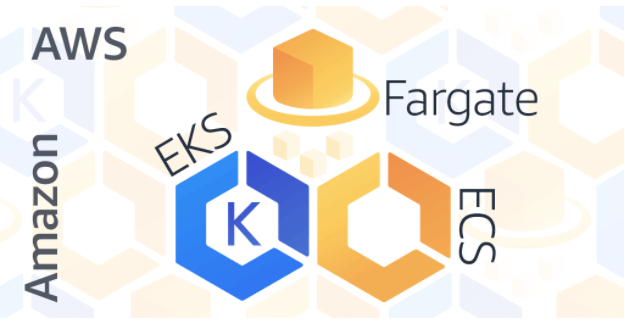
Pokémon Go & Kubernetes
Let's look at a real world scenario, Pokémon Go. We wouldn’t have Pokémon Go, if it wasn’t for Niantic Labs and Google’s Kubernetes. For those of you who played this once addictive game back in the summer of 2016, you know all about the technical issues they had. It was the microservice approach of using Kubernetes that allowed Pokémon Go to fix technical issues in a matter of hours, rather than weeks. This was due to the fact that each microservice was able to be updated with a new patch, and thousands of containers to be created during peak times within seconds. When it comes to microservices and using the popular container engine like docker with a container orchestration software like Kubernetes (K8’s), with a microservice architecture everything in the website server is broken down into its own individual API’s. Giving microservices more agility, flexible scaling, and the freedom to pick what programming language or version is used for that one API instead of all of them. It is can be defined more ways than one, but it is commonly used to deploy well-defined API’s, and to help make delivery and deployment streamlined.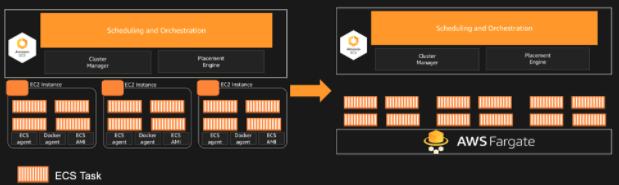
Serverless the next big thing
Some experts believe that serverless will be the next big thing. Serverless doesn’t mean there is no servers, but it does mean that the management and capacity planning are hidden from the DevOps teams. Maybe you have heard about FaaS (Functions as a Service) or AWS Lambda. FaaS is not for everyone, but what if we could bring some of the serverless architecture along with the microservice architecture.AWS Fargate
This is why back in November at the AWS re:Invent 2017 (see the deep dive here), AWS announced a new service called AWS Fargate. AWS Fargate is a container service that allows you to provision containers without the need to worry about the underlying infrastructure (VM/Container/Nodes instances). AWS Fargate will control ECS (Elastic Container Service) and EKS (Elastic Kubernetes Service). Currently only available in the us-east-1 in Preview Mode. AWS Fargate, simplifies the complex management of microservices, by allowing developers to focus on the main task of creating API’s. You will still need to worry about the memory and CPU that is required for the API’s or application, but the beauty of AWS Fargate is that you never have to worry about provisioning servers or clusters. This is because AWS Fargate will autoscale for you. This is where microservices and Serverless meet.Get in Touch.
Let’s discuss how we can help with your cloud journey. Our experts are standing by to talk about your migration, modernisation, development and skills challenges.

Ilja’s passion and tech knowledge help customers transform how they manage infrastructure and develop apps in cloud.
Ilja Summala
LinkedIn
Group CTO
